


When mesh is the right choice instead of solid banner material
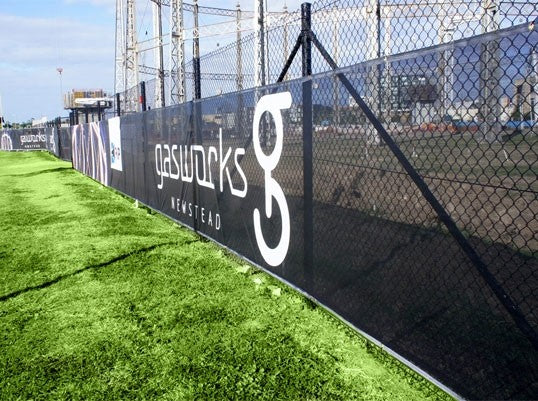
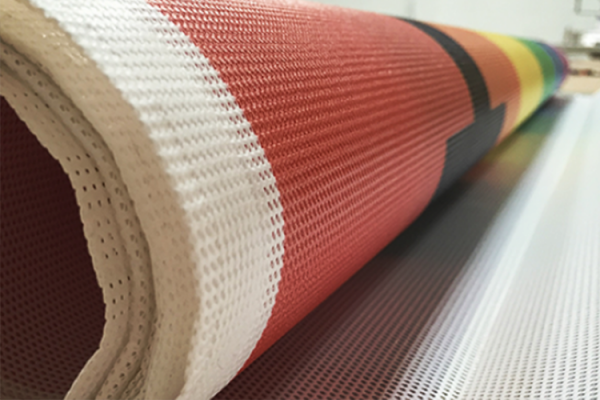
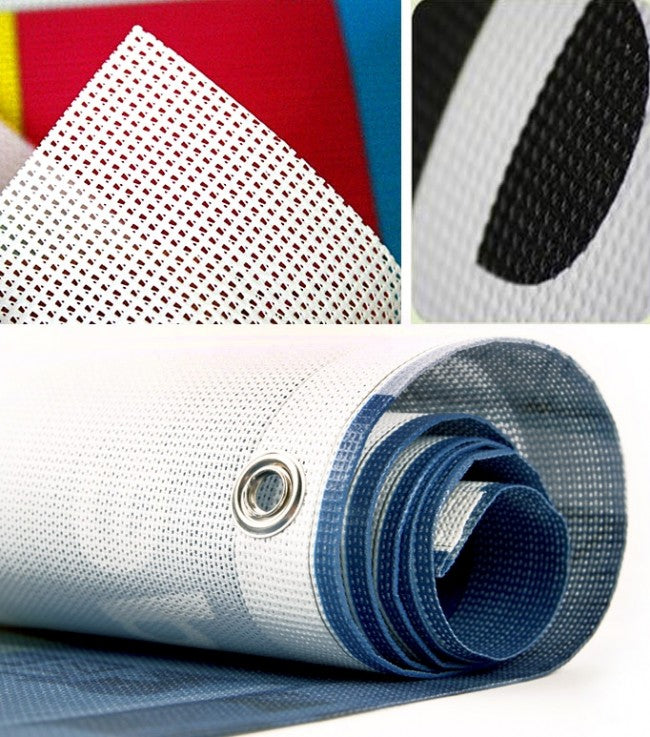
Mesh is a perforated banner material. The perforations let air pass through rather than catching it, which is the reason the material exists: on an exposed fence or scaffold, a solid banner can behave like a sail and load both the banner and its fixings.
The trade-off to understand
Because part of the surface is open, colour typically reads softer and some background may show through, particularly against a bright sky. That is characteristic of the material rather than a fault. Where colour density matters more than wind, a solid banner in a sheltered position may suit better; where the position is exposed, mesh is the more suitable specification.
Where it is used
Construction hoardings and site fencing, scaffold and building wraps, sports ground fencing, and temporary screening during a fitout.
Preparing your artwork
A vector PDF is the preferred format. If your artwork is raster, supply a high-resolution file built to the final size and to the template supplied for this product, keeping bleed and safe-area margins as that template sets out. Design for distance: bold shapes, strong contrast and few words tend to survive, while fine type and detailed photography generally do not.
Before it goes up
Fix through the reinforced edge at regular intervals rather than at the corners only, and re-check ties after the first period of strong wind. Wind loading, scaffold wraps and anything installed at height are matters for the site manager, the scaffolder or a qualified installer rather than for a printer — confirm with them that the wrap is permitted and how it should be secured. Hoardings and large site signage may also be subject to council requirements, so check with your local council before installing.
